One of the clearest shifts has been towards diversification. Farmers today are moving beyond staples like wheat and rice into horticulture, medicinal crops, floriculture, and high-value fruits. India is now among the world’s top producers of vegetables and spices, with horticulture output surpassing foodgrain output for several years in a row. This shift is driven by higher profitability, growing consumer demand, and more secure market opportunities — especially in urban centres.
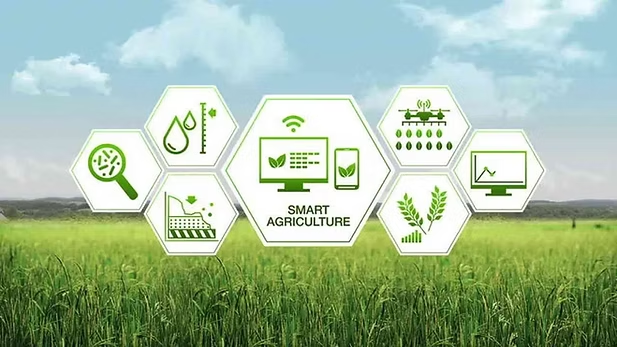
At the same time, technology is rewriting the rules of farming. Tools like drones for spraying, GIS-based soil mapping, IoT-enabled irrigation controls, and real-time market intelligence platforms are now stepping out of pilot projects and entering farming clusters. Farmers are able to track crop health, manage input use more efficiently, and reduce costs while boosting yields. The new wave of FPO-led digitization is also making it easier for thousands of farmers to access financing, insurance, and training without middlemen.
Alongside tech, sustainability is becoming nonnegotiable. Practices like regenerative farming, natural composting, crop rotation, and reduced chemical use are increasingly being adopted — not just for eco-conscious reasons but because they improve soil health and long-term productivity. Consumers, especially in metros, now prefer chemical-free, farm-traceable food, pushing farmers to invest in quality and transparency.
To support this growth, India continues to invest in better supply chains — from cold storage facilities to modern pack houses, ripening chambers, reefer logistics, and improved market access. Yet challenges remain. India has seen rising imports of certain food categories due to global price advantages and some policy incentives. While this helps meet domestic demand, it also pressures local producers to innovate, upgrade quality, and move towards value-added products such as fruit pulps, spice mixes, dairy derivatives, and artisanal foods.
This is where platforms like FarmLokal become crucial. As a Startup India & StartInUP recognized venture, FarmLokal gives farmers a direct, dignified bridge to consumerism, offering them fair prices, identity, and market access. Instead of white-labelling farmer products, FarmLokal highlights each producer’s authenticity, ensuring customers get fresh dairy, vegetables, fruits, ghee, spices, and clean-label foods right from the source. This encourages farmers to invest in quality, adopt modern techniques, and shift towards high-value, sustainable production, because they finally have a market that rewards it.
Looking ahead, India’s agriculture is poised for a new phase of growth: smarter tech, diverse crops, climate-conscious practices, and stronger value chains. And with farmer-first platforms like FarmLokal supporting this transition, the journey from farm to home is becoming more transparent, equitable, and future-ready.