
Plastic pollution remains one of the most critical global crises of our time. Synthetic plastics are durable, lightweight, and inexpensive to produce, which is precisely why they are everywhere. From packaging and grocery bags to milk pouches and food containers, plastic has become deeply embedded in daily life. Yet its strength is also its greatest flaw. Most plastics take hundreds of years to degrade, breaking down into microplastics that enter soil, water, and even the food chain.
Globally, millions of tonnes of plastic waste enter oceans every year. India, with its large population and growing consumption patterns, faces mounting waste management challenges. Urban centers struggle with overflowing landfills, clogged drains, and air pollution caused by plastic burning. The affordability of plastic makes it convenient for businesses, but the environmental cost is staggering.
However, innovation may offer hope.
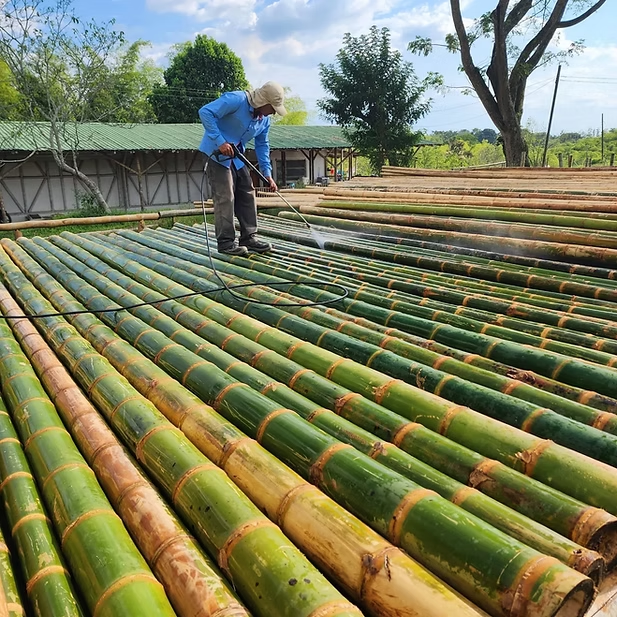
Researchers in China have recently developed a biodegradable material known as BM plastic, derived from bamboo cellulose. Bamboo, unlike petroleum-based plastic sources, is renewable and rapidly replenishing. This bamboo-based material mimics the durability and flexibility of conventional plastic but decomposes naturally without leaving toxic residues. If scalable, such innovations could transform packaging industries and reduce long-term environmental damage.
What makes bamboo particularly promising is its growth cycle. Bamboo can grow up to one meter per day in optimal conditions and reaches maturity much faster than hardwood trees. It requires minimal pesticides and regenerates after harvesting, making it an environmentally responsible raw material. By converting bamboo cellulose into biodegradable plastic alternatives, researchers are demonstrating that sustainability and practicality can coexist.
India is uniquely positioned to follow a similar path. The country is one of the world’s largest producers of bamboo, with extensive bamboo resources across the North East, central India, and parts of the Western Ghats. In fact, bamboo is often referred to as “green gold” because of its economic and ecological potential. Encouraging research, public-private partnerships, and policy support for bamboo-based materials could reduce dependency on synthetic plastics while boosting rural livelihoods.
A shift toward bamboo-derived bioplastics could also create employment in farming, processing, and manufacturing sectors. Farmers cultivating bamboo would benefit from increased demand, while startups could innovate sustainable packaging solutions tailored for Indian markets.
Plastic pollution is not just an environmental issue. It is a public health and economic challenge. Solutions like bamboo-based BM plastic show that alternatives are possible. With the right investment and intent, India could lead a sustainable packaging revolution rooted in its own natural resources.
The future may not lie in eliminating convenience, but in redefining it responsibly.